01
Count the curb
Tell Mabel how many piles are waiting, whether the load is bags, limbs, or both, and the day you were already promised.
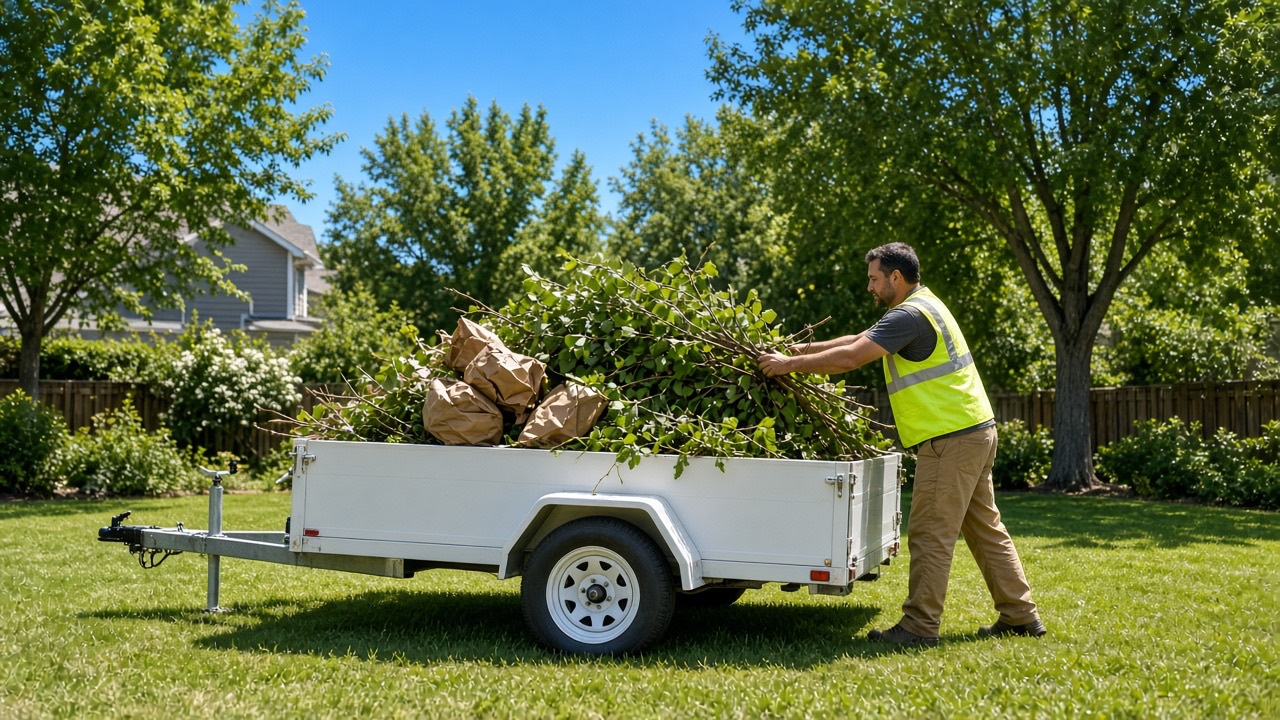
Yard waste removal
A typical curb stop runs about 25 minutes once the trailer can sit at the street, counting the walk from the pile to the hitch. Mabel writes down the stop count, the gate, and the day already promised. One local hauler calls back and loads the trailer.

Meet Mabel
Her portrait is the voice on this line, not the crew in the yard. She records the pile count, the access notes, and the window already promised. Those notes are what the hauler sees before they call the customer back.
Product film
Watch a call turn into a stop count, a curb-access note, and one hauler callback. English and Spanish both ride on this line.
Live voice
Yard waste stops
Six stops at 25 minutes is two and a half hours of curb time, before the drive between them. A blocked driveway means rebook that stop before adding more.
How it works
01
Tell Mabel how many piles are waiting, whether the load is bags, limbs, or both, and the day you were already promised.
02
The yard-waste stops tool multiplies the stop count by minutes on site, including the walk from the pile to the trailer.
03
The request goes to one paid yard-waste company inside the radius. It is not texted to a list of haulers.
04
The caller hears that a local company will call them back. That company loads the limbs and the bags. Mabel does not.
Field notes
The useful facts on a yard-waste call are the stop count, whether a trailer can sit at the curb, and the day already promised.
A typical curb stop runs about 25 minutes once the trailer can sit at the street, including the walk from the pile to the hitch.
A promised window is only useful if the trailer can reach the pile. Gate width and a blocked curb are captured before the hauler is offered the job.
A storm pile is a one-time load with a promised day. A leaf route is a repeating set of curb stops. They should not share the same window.
The callback is useful when it carries the stop count, the access note, and the day already promised — not a vague request for a yard cleanup.
Bagged leaves, loose brush, and a mix of both change the minutes on site. The call should name the mix before a window is held.
A blocked driveway or a missed window means rebook that stop before adding more. Leaving it on the route steals time from the next curb.
Lite is $99 a month, one seat, with your own phones. Local yard-waste requests start after the plan is paid, and you can pass any request.
Questions
A typical stop with cut limbs and bagged leaves runs about 25 minutes once the trailer can sit at the curb, including the walk from the pile to the hitch.
The street address, the number of stops, whether the trailer can reach the curb, what is in the pile, and the day you were already promised.
No. Mabel records the job and tells you a local hauler will call back. That company loads the trailer.
Mabel notes the gate or the blocked apron and the stop is treated as a rebook, not stacked onto a tight route as if the curb were clear.
Lite is $99 per month, 1 seat, with your own phones. Local yard-waste requests start after the plan is paid. You can pass any request. The street address shows after you claim it.
A storm pile can fill a trailer at one address. A leaf route is many short curb stops. Mabel separates them so they are not booked on the same window.
The public site lists about 1,000 US cities. A paid company inside the radius you set is the one offered the request.
Talk to Mabel. She will take the stop count and the access note, then a local hauler calls the customer back.
Local partners
If you haul limbs, leaves, and storm piles, Lite is $99 per month, 1 seat. The plan includes your phones. Local yard waste removal requests start after the plan is paid. You can pass any request. The street address shows after you claim it.